
A contractor buys $20M of liability above its primary policies: a $5M umbrella, a $5M excess layer above it, and a $10M layer above that. On the binder the tower stacks cleanly — $5M xs primary, $5M xs $5M, $10M xs $10M. On the issued policy the top layer reads $10M xs $15M. A loss between $10M and $15M now falls into a hole that nobody bought and nobody sold.
Towers are where a single number on one page changes the shape of the whole programme. This post follows an illustrative umbrella and excess check: the attachment arithmetic, the schedule of underlying, and the practice leader’s sign-off. The contractor, carriers and figures are invented Illustrative.
| Insured | Halvorsen Builders Group LLC — a commercial contractor (illustrative) |
|---|---|
| Line | Umbrella and excess, renewal |
| The tower (binder) | Layer 1 $5M xs primary · layer 2 $5M xs $5M · layer 3 $10M xs $10M |
| The tower (policy) | Layer 1 $5M xs primary · layer 2 $5M xs $5M · layer 3 $10M xs $15M |
| Underlying (binder → policy) | General liability $1M → $1M; commercial auto $1M → $500K; employers liability $1M → $1M |
| Agents involved | Tower and underlying reviewer, proofing checker, renewal comparison, supervisor |
| What it finds | 45 checks: 42 match, 2 fail (the gap, the auto underlying), 1 to review (a layer the binder doesn’t show at $15M) |
| Outcome | Both failures raised with the carrier; delivery blocked until they are corrected or a practice leader signs a waiver |
The arithmetic a tower has to pass
Each layer must attach exactly where the layer below it ends: attachment of layer n+1 = attachment of layer n + limit of layer n. Less than that is an overlap; more is a gap, and losses in a gap are uninsured. The engine sorts the layers by attachment and checks every adjacent pair.
uninsured"] --- P2["$5M xs $5M"] --- P1["$5M xs primary"] end style G fill:#ffe4ea,stroke:#e3405f,stroke-width:2px
The second check is the schedule of underlying. An umbrella is written over specific primary policies at specific limits. If the policy’s schedule shows the auto underlying at $500K while the binder shows $1M, the umbrella may not drop down as bound — and the client may be carrying a $500K self-insured gap in auto without knowing it.
Step by step
Each Layer N: $X excess of $Y | Carrier | Premium line read into a layer with its limit, attachment, carrier and page; the schedule of underlying read as line, carrier, policy number and limit.
Layer 2 ends at $10M; layer 3 attaches at $15M: a $5M gap. The auto underlying differs from the binder. A layer attaching at $15M is not on the binder at all, so it is flagged for review rather than matched.
Against the expiring: premium $54,000 → $61,500 (+13.9%); the layer attaching at $10M is gone (narrower, high); a layer attaching at $15M is new (broader). Taken together: the top layer moved up.
An unresolved high-severity failure blocks delivery; cover narrowed at renewal. It prepares the practice leader’s sign-off.
Raises both failures with the carrier; the discrepancy drafter writes the request citing policy p.4 and binder p.4.
Sees the sign-off on their home page with the gap stated in dollars, and keeps the check blocked until the carrier answers.
What the screens show


The comparison zone puts the tower at expiring, binder and policy side by side, so the move of the top layer is visible at a glance. The run trace below is the proofing checker on this same check, the one run in the demo book where the model was switched on.

What the agents prepared
| Agent | What it prepared | What it cites | Who decides |
|---|---|---|---|
| Tower and underlying | Findings: the gap, the underlying mismatch, the unknown layer | Policy p.4, binder p.4 | — (findings) |
| Proofing checker | Raise 2 failed checks with the carrier | Policy p.4, binder p.4 | Account manager |
| Supervisor | Practice leader sign-off | The unresolved high-severity count | Practice leader |
The decision record
| Section | Hit | Outcome |
|---|---|---|
| Proofing control | A high-severity check failed and is unresolved (2) | block |
| Proofing control | Cover narrowed at renewal | warn |
| Prepared decision | Raise 2 failed checks — accepted | proceed |
| Prepared decision | Practice leader sign-off — waiting | refer |
What the model said, and what it wasn’t allowed to say
In the traced run the model summarised that the auto underlying limit differs from the binder — a mismatch that goes to the carrier first — and noted that the facts it was given showed the layer 3 figures but not their check result. That is the right kind of answer: it explains, it does not compute the gap itself, and it says what it could not see.
For the account team
The tower is drawn three times side by side; the gap is stated in dollars, not left for someone to subtract.
For broker IT
Layers are parsed into limit, attachment and carrier; adjacency and the schedule of underlying are checked deterministically.
For practice leadership
A gap in a client’s tower is exactly the E&O exposure a practice leader wants to see before delivery, not after a large loss.
Questions we get asked
Does it check that the umbrella follows form?
It checks the forms on the umbrella against the binder like any other line, and the schedule of underlying against what was bound. Whether the wording follows form is a reading question for a person, helped by the forms reviewer.
Keep reading

A D&O prior-and-pending date that moved
One date on page two, and years of continuity gone.
Read article
Where InsightProofing sits in the broker suite
Placement hands it the binder; Xtract reads the PDFs; Pulse knows the client; Advocate inherits the policy.
Read article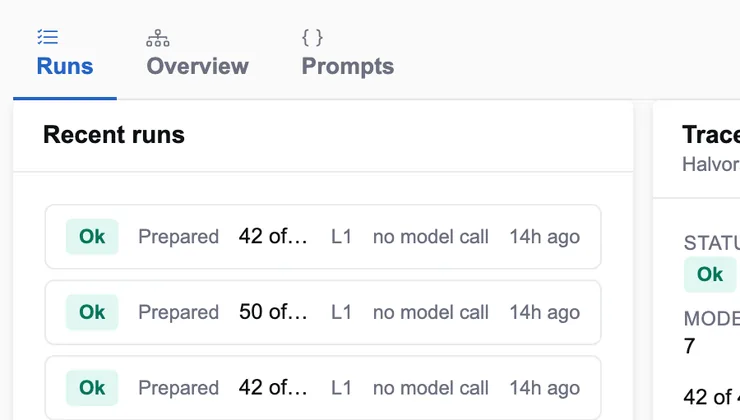
The first ninety days, and how to measure it
One team, one renewal month, every action at ask first.
Read article